Do not hesitage to give us a call. We are an expert team and we are happy to talk to you.
09810066496 | 09811066496
info@sikkimtourism.org
Nine days is the sweet spot for Bhutan. It covers the full western valleys plus a run into central Bhutan's Bumthang, without the punishing double-drive that badly planned trips force on you. This Bhutan itinerary for 9 days links Paro, Thimphu, Punakha, Phobjikha and Bumthang, with a flight back to close the loop.
We've run this route in both spring and autumn. The version below is the one we actually recommend, not the one that looks neat on a map but leaves you sitting in a car for two days straight in the middle.
Entry and exit through Paro. The shape is west to central and back: Paro, Thimphu, Punakha, Phobjikha (Gangtey), then a longer haul to Bumthang, and a domestic flight from Bumthang back to Paro so you don't lose two days retracing the road. You end with the Tiger's Nest hike in Paro, which is the right way round because your legs and lungs will be acclimatised by then.
This 9-day grand circuit suits travellers who want more than the standard 5-day Paro-Thimphu-Punakha loop and are willing to trade one long drive day for a real taste of central Bhutan. It works well for first-timers with a bit of time, couples, photographers chasing the Phobjikha and Bumthang landscapes, and reasonably fit people who can manage the Tiger's Nest climb. It's less ideal if you have mobility limits (the Day 5 drive and the Tiger's Nest hike are both demanding), or if you only have a strict week, in which case a 5 or 7-day western loop is the honest recommendation. Skip Bumthang if you can't spare Day 5's road time; a 6-day western circuit will feel calmer.
Land at Paro. The approach itself is famous; only a small number of pilots are certified to fly it. Clear your entry permit, meet your guide, then drive to Thimphu, the capital (about 50 km, 1 to 1.5 hours). Easy first day. Settle in, walk the town, eat an early dinner. You’re at roughly 2,300 m in Thimphu, so go gentle on day one.
A full day in the only capital in the world without a single traffic light. The big Buddha Dordenma (a 51 m statue above the city), the Memorial Chorten where locals circle all day, the Takin preserve for Bhutan’s odd national animal, and the weekend market if your dates line up. Honest opinion: the Takin preserve is worth 20 minutes, no more. Spend the saved time at the Folk Heritage Museum instead.
Drive to Punakha (about 72 to 77 km, 2.5 to 3 hours) over Dochula Pass at 3,100 m. Stop at the pass. On a clear day the Himalayan skyline is the payoff for the whole morning; in cloud, it’s just a cold ridge with prayer flags, so temper expectations by season. Descend into the warmer Punakha valley and visit Punakha Dzong, set where two rivers meet. If you do one dzong properly on this trip, make it this one.
A shorter drive to the Phobjikha valley (about 78 km, 3 hours), climbing back up to around 3,000 m. This is a wide glacial valley, open and quiet, and it feels different from everywhere else you’ll have been. Walk the Gangtey Nature Trail, an easy downhill loop. If you’re here between late October and mid-March, the black-necked cranes that migrate from Tibet are the reason to come. Outside those months, be honest with yourself: it’s a lovely valley, but the cranes are the headline act and they aren’t home.
This is the drive to plan around. Phobjikha to Bumthang runs about 188 km and takes 5 to 6 hours, over the Pele La pass and past Trongsa Dzong, which sprawls along a ridge and is worth a proper stop to break the journey. Do not stack heavy sightseeing at both ends of this day. Leave early, take Trongsa as your midpoint, and accept that today is mostly about the road. The scenery earns it, but it’s a full day in the car.
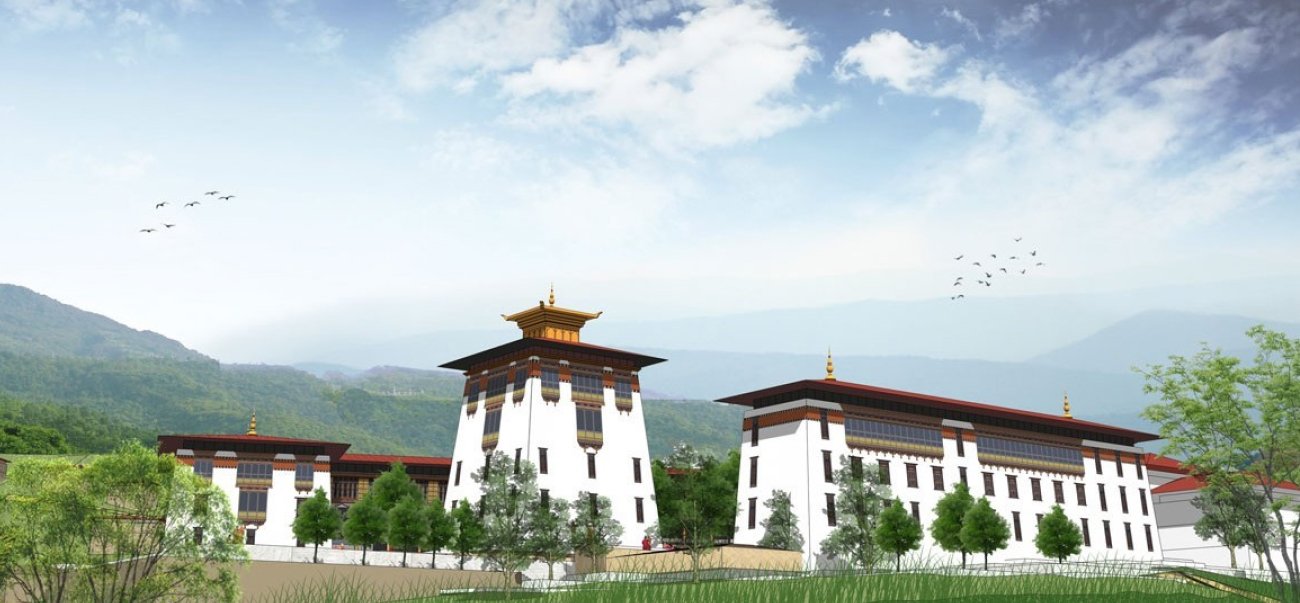
Bumthang is the religious core of Bhutan, four valleys with a heavy concentration of very old temples. Jakar Dzong, Jambay Lhakhang, Kurjey Lhakhang, and the short walk to Tamshing. It’s slower, greener, and less visited than the west. This is where the trip breathes. If you like a local detail: try the Bumthang buckwheat pancakes and the local apple cider and cheese; this valley is known for all three.
Fly from Bumthang (Bathpalathang) back to Paro rather than driving two days back the way you came. The flight is short and the mountain views are genuinely a highlight, not filler. Arrive Paro, rest, and get an early night before the hike. If the flight isn’t running on your dates, the fallback is a two-day drive back via Trongsa with an overnight in Punakha or Wangdue, which turns this into an 11-day trip; we confirm flight availability before locking your dates so you know which version you’re booking.
The Tiger’s Nest (Paro Taktsang) clings to a cliff at about 3,120 m, roughly 900 m of climb from the car park, 4.5 km each way, and 4 to 6 hours round trip depending on your pace and how long you linger at the top. Start early to beat both the crowds and the afternoon haze. Horses can carry you up to the halfway cafeteria but not beyond, and honestly the second half on foot is the part worth doing. Entry is Nu 500 per person. In the afternoon, wander Paro town and Rinpung Dzong.
Transfer to Paro airport for your flight home. If your departure is late morning or later, there’s time for a quick last look at the valley.
Here's the part most itineraries skip. Bhutan's Sustainable Development Fee (SDF) is a per-person, per-night government levy charged on every night of your stay except the departure night. A 9-day trip is 8 nights, so 8 chargeable nights. This is the single biggest variable in your budget, and it differs sharply for Indian and foreign nationals.
|
|
Indian nationals |
Foreign nationals (non-Indian) |
|---|---|---|
|
SDF rate per person, per night |
Rs 1,200 |
USD 100 |
|
Chargeable nights on this 9-day trip |
8 |
8 |
|
SDF total per adult |
Rs 9,600 |
USD 800 |
|
Children 6 to 12 |
50% of SDF |
50% of SDF |
|
Children 5 and under |
Exempt |
Exempt |
A few things worth knowing. The foreign-national SDF of USD 100 per night is locked until 31 August 2027, and no operator can discount it because it's a government levy, not a package cost. Bhutan brought in a 5% Goods and Services Tax on tourism services from 1 January 2026, but the SDF itself is exempt from that GST. The SDF is paid through your licensed operator before permits are issued, not at the border. The figures above cover only the SDF; your hotels, guide, transport, permits admin, and the domestic flight are separate and sit inside the package price.
If you hire sikkimtourism.org for any service, an upfront payment is required. We ask for this to hold your reservation on a confirmed basis. The remaining balance is payable at the time of departure or on arrival at the destination, and the full amount must be paid before services begin. The advance amount is set at the management's discretion and varies with the type of services booked and the gap between the booking date and the start date.
In some peak periods, full payment is required rather than a part advance, for example around Christmas and New Year, when demand is very high and booking rates for all linked services rise sharply. In such cases you should reserve services early.
Payment method: payments to our bank can be made by wire transfer.
Confirmed dates or days may be changed, cancelled, or shortened only with 30 days' written notice to the company, subject to availability. If cancellation is made within 30 days, we will not be able to change, postpone, or cancel the reservation, and the package amount will be retained in full. No-shows are not eligible for any refund. There is no credit for unused nights or early departure.
If a guest holds an international bank account, they are responsible for any associated bank fees; refunds are sent in line with this cancellation policy. Except for cash payments, where the refund is made by cheque or online transfer, all refunds are processed using the original payment method. We begin the refund process within five business days of receiving the cancellation request.
Note: a premium of 10% plus 18% taxes applies to any refund made outside the applicable cancellation policy.
Important: no refund for bookings made from 01 March 2026 to 15 July 2027. No refund for bookings made from 15 December 2026 to 15 January 2027.
Yes, and it's arguably the ideal length. Nine days covers the western valleys of Paro, Thimphu and Punakha, adds Phobjikha, and reaches central Bhutan's Bumthang, with a flight back to avoid a two-day return drive. Shorter trips of 5 to 7 days work well too but stay mostly in the west.
Yes. Indian nationals need an entry permit, obtained at Paro airport (by air) or Phuentsholing (by road), using a valid passport with six months' validity or a Voter ID card. The entry permit covers Thimphu and Paro only; a route permit is required for Punakha, Phobjikha and Bumthang, which your operator arranges.
A 9-day trip has 8 chargeable nights (the departure night is free). That's Rs 9,600 per adult for Indian nationals at Rs 1,200 per night, or USD 800 for foreign nationals at USD 100 per night. Children 6 to 12 pay half; those 5 and under are exempt. SDF is separate from your package cost.
March to May and September to November give the most stable weather and clearest mountain views. For the black-necked cranes in Phobjikha, travel late October to mid-March. Avoid monsoon (June to August), when the long Day 5 mountain drive is slower and views are unreliable.
It's a moderate climb: about 900 m of ascent, 4.5 km each way, and 4 to 6 hours round trip at roughly 3,120 m. Most reasonably fit people manage it with breaks. You can ride a horse to the halfway cafeteria, but the final stretch is on foot only. Skipping it is possible, but it's the trip's signature, so most people push through.
You can drive, but it means roughly two days retracing central Bhutan's roads, which most 9-day travellers don't have to spare. The Bumthang to Paro domestic flight closes the loop in about half an hour and offers superb mountain views. Confirm current schedules when booking, as they change seasonally.