Flights, Road Routes, Permits & Costs (2026 Guide)
A practical, on-the-ground guide from the team at sikkimtourism.org — we run trips into Bhutan through the same Eastern Himalayan gateway we use for Sikkim, so most of this is written from doing the drive and the airport run ourselves.
If you’ve been Googling how to reach Bhutan, you’ve probably noticed most pages tell you the same three lines: fly to Paro, or drive to Phuentsholing, the end. Useful, but it leaves out the bits that actually trip people up — which Indian railway station to book, whether to fly into Bagdogra or Hasimara, what the entry permit really needs, and how much the Sustainable Development Fee adds per night in 2026.
I’ve made the Phuentsholing run more times than I can count, and I’ve watched the Paro landing do that stomach-drop bank between the hills. So here’s the honest version: every realistic way in, what each one costs in time and money, and the mistakes I’d tell a friend to avoid.
The short answer
There are exactly two ways into Bhutan: fly into Paro International Airport, or enter by road through one of three border crossings (Phuentsholing is the one almost everyone uses). There is no train into Bhutan and no airport other than Paro for international arrivals. Your choice mostly comes down to budget, how much time you have, and whether you want the journey to be part of the trip.
A quick note before the details: Indian nationals don’t need a visa for Bhutan. You need an Entry Permit, which is a different (and much simpler) thing. More on that below.
Paro is the only international airport in the country, and flying in is the fastest way to get there — under two hours from most eastern Indian cities.
Only two carriers fly into Paro: Drukair (Royal Bhutan Airlines) and Bhutan Airlines. That’s it. No Indian carrier flies there, which is why fares stay on the higher side and rarely drop in last-minute sales the way domestic tickets do. Book early.
Direct flights to Paro from India run from:
There are also direct international flights from Bangkok, Kathmandu, Singapore and Dhaka if you’re coming from outside India.
Here’s the part nobody warns you about: Paro is one of the most demanding commercial airports in the world. It sits in a narrow valley at around 2,200 metres, surrounded by 5,000-metre peaks, and only a small number of specially certified pilots are even allowed to land there. Flights operate in daylight only and are genuinely sensitive to weather. If clouds roll in, your flight can be delayed or cancelled, and a knock-on delay is common in the monsoon months. The landing itself — banking hard between hillsides with houses visible off the wingtip — is spectacular, but don’t book a tight onward connection the same evening you fly out of Paro. I’ve seen too many people miss flights that way.
My honest take: if you can afford it and you’re short on days, fly. The Bagdogra–Paro hop in particular is a gift — 40 minutes in the air versus the better part of a day on the road. But if the fare feels steep, read on, because the road route has its own rewards.
This is how most people from India actually get in, and it’s how we usually take our groups. Bhutan has three road border crossings open to tourists:
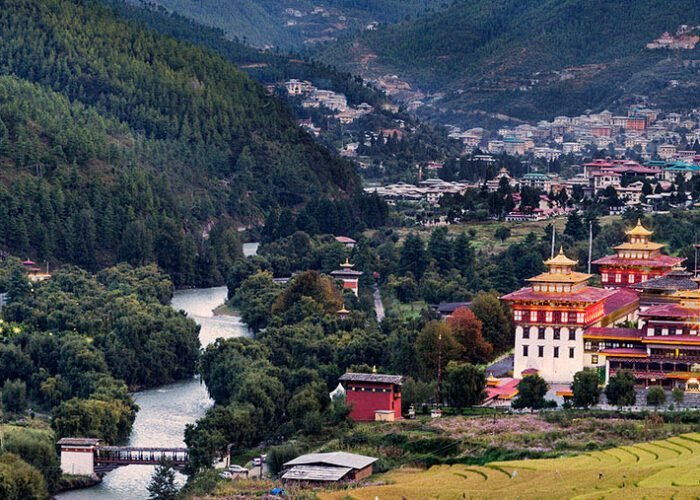
For most people, Phuentsholing is the answer. The Indian border town of Jaigaon and the Bhutanese town of Phuentsholing sit right against each other, separated by a gate you can literally walk through.
Getting to the border first:
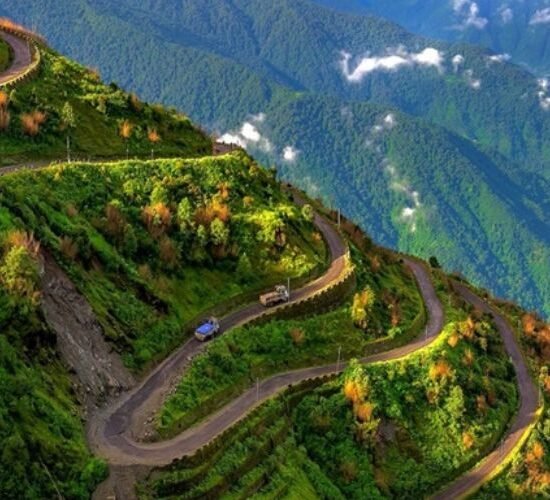
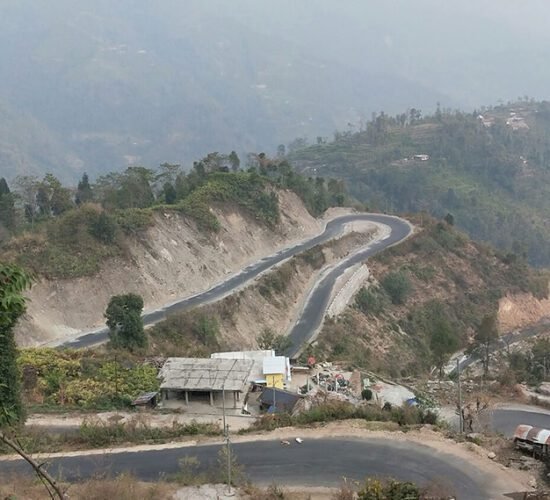
Once you cross at Phuentsholing and clear permits, it’s roughly 4.5 to 5 hours to Paro and about 6 hours (around 170 km) to Thimphu. The road climbs hard and twists constantly — beautiful, but if you’re prone to motion sickness, sit in front and carry tablets. There’s a worthwhile lunch and tea stop around Gedu/Chukha; don’t try to do Phuentsholing to Thimphu in one unbroken stretch if you can help it.
You can’t take a train into Bhutan — there’s no rail line inside the country. What people mean by “reaching Bhutan by train” is taking an Indian train to the nearest station and then driving to the border.
Your three useful railheads, in order of convenience:
If you’re train-first, NJP is the safest booking because almost everything stops there, even though it’s the furthest of the three. If your train happens to stop at Hasimara, take it — you’ll save hours.
This is where the “do I need a visa” confusion lives, so let me be clear: Indian citizens do not need a visa for Bhutan. You need an Entry Permit, and the process is straightforward.
Documents to carry (one of the two is mandatory):
For children under 18, carry a birth certificate in English (or a passport), and they must travel with a legal guardian. You’ll also want two passport-size photographs and, sensibly, travel insurance for the duration of your trip.
Where to get the permit:
One thing worth knowing: the standard Entry Permit covers Thimphu and Paro only. If you plan to go further — Punakha, Phobjikha, Bumthang, anywhere east — you’ll need a separate Route Permit, issued by the immigration office in Thimphu (open Monday to Friday). A good local operator handles this for you so you’re not spending a holiday morning in an office.
Bhutan charges a daily Sustainable Development Fee (SDF) that funds the country’s “high value, low impact” tourism model. This is separate from your flights, hotels and food — it’s a fee paid to the government.
For 2026, the SDF rates are:
Two practical points that save real money:
The SDF is paid when you apply for your permit (online by card/wire transfer, or at the immigration counter). If you shorten your trip, the unused portion is refundable after you leave, minus bank charges.
Your travel month affects more than the weather — it affects whether your Paro flight lands on time and whether the mountain roads behave.
We’re based in the Eastern Himalayas and we work this region for a living — the same Bagdogra–Siliguri–Phuentsholing corridor we use for our Sikkim trips is the main gateway into Bhutan, so the routes, the border, the permit counters and the seasons aren’t theory to us. We’ve sat in the Thimphu immigration queue, rebooked clients around fogged-in Paro mornings, and learned which road stops are worth it.
What that means for you, practically: we sort your Entry Permit and Route Permit in advance so you skip the border queues, time your itinerary around weather and festival dates, and keep the SDF and the new GST clearly accounted for so there are no surprises. If you’d rather not juggle flight bookings, permit portals and a mountain driver yourself, that’s exactly the part we take off your plate. Reach out through sikkimtourism.org and we’ll map a route that fits your dates and budget.
No. Indian nationals don’t need a visa — only an Entry Permit, obtained online via immi.gov.bt or at the border, using a valid passport or Voter ID.
By road via Phuentsholing — take a train to NJP/Hasimara or a flight to Bagdogra, then drive to the border. It’s far cheaper than flying directly into Paro.
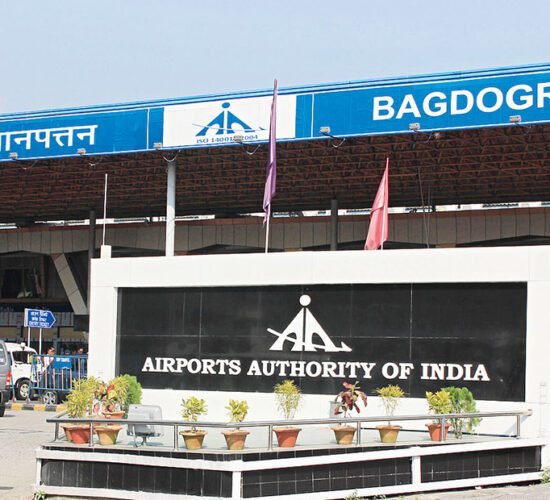
Bagdogra (near Siliguri) is the nearest major Indian airport for the road route, about 4–5 hours from the Phuentsholing border. For direct flights, you fly into Paro itself.
Hasimara is the closest, roughly 17–18 km from Phuentsholing. New Jalpaiguri (NJP) is the best-connected but further (4–5 hours’ drive).
₹1,200 per person per night, fixed through August 2027. Children 6–12 pay ₹600; under-5s are free.
Indians can take a private vehicle in with a separate vehicle permit arranged at the border, but the mountain driving is demanding — most travellers hire a local driver, which we’d recommend.
About 6 hours by road (roughly 170 km of climbing, winding mountain highway). Paro is about 4.5–5 hours.
An experienced Sikkim tour operator, with a team of an experienced travel enthusiast ensure to give our clients well-designed Sikkim Gangtok tour packages.
Sikkim Tourism has received numerous accolades from its happy customers for its excellent services and best Sikkim holidays.
We have local office in Sikkim for our customers to find assistance anytime and anywhere.
Do not hesitage to give us a call. We are an expert team and we are happy to talk to you.
+91-9810066496
info@sikkimtourism.org
At times, there is a huge difference between what they offer and what they provide. However, SikkimTourism.org kept its promise to us. They put forth a lot of effort to make our trip to Sikkim the finest one ever.
SIKKIMTOURISM.ORG assisted me in planning a trip for my family and me. I spoke with other tour guides and looked through numerous websites. But none could compare to Sikkim Tourism’s degree of professionalism.
Mr. ROHIT phoned me in response to my letter inquiry. He is a really helpful dude. I had a lot of concerns for him, such as the weather in Sikkim and if it was OK to bring my 2-year-old, and he patiently responded to all of them.
We were able to organise our journey to Gangtok, Tsomgo Lake, Baba Mandir, Nathu La, Yumthang Valley, Lachung, and Darjeeling as a result of his insightful ideas.
The dates of our journey were February 7–15 of this year. The itinerary provided by Sikkim Tourism, our travel guide, was fantastic and guaranteed that our vacation will be memorable.
We need drivers who had a thorough understanding of the roads because Sikkim is situated in a hilly area and has twisty roads. We received these from SikkimTourism.ORG, which helped us feel secure.
Eight days were spent travelling. From day 1 to day 8, the schedule included all travel arrangements, information on the vehicles, accommodations, and meals. The crew, in particular Mr. Rohit, kept in touch with us well.
The accommodation, meals, and transportation arrangements were all well-taken care of. What I appreciated most were the safe travel itinerary and the on-time cab drivers. Overall, our trip was enjoyable. Thanks, SikkimToursim.org group
Excellent lodging, outstanding transportation, and lovely memories to cherish. Because of their smooth services, I would heartily suggest SIKKIMTOURISM.ORG tourism. I really appreciate it. Bravo to ROHIT and the rest of the SIKKIM TOURISM.ORG team.
In April 2019, my family and I travelled to Sikkim and Darjeeling. We reserved our tour with SIKKIMTOURISM.ORG to make travel easier. I must say that the accommodations for travel, the mode of transportation, and how the trip was planned were all excellent.