A Local Planner’s Honest Guide (2026)
I’ve crossed into Bhutan more times than I can count, usually by road from our side of the border, and I still get that same quiet feeling every time the traffic noise of Phuentsholing fades and the road starts climbing into the cloud. Bhutan doesn’t try to impress you. That’s the whole trick of the place. No billboards, no honking, no chaos — just pine forest, fluttering prayer flags, and the occasional dzong sitting on a ridge like it has been waiting a few hundred years for you to show up.
If you’re researching the best places to visit in Bhutan, you’ll find a hundred listicles that read the same. Most are written by people who’ve never smelled the incense inside Kyichu Lhakhang or felt their legs shake on the last stretch up to Tiger’s Nest. This guide is different. We run trips into Bhutan regularly from Sikkim, so what follows is what I’d actually tell a friend — where to go, what it costs, when to time it, and honestly, what you can skip.
Bhutan isn’t a place you just turn up and wander. Every tourist except Indian, Bangladeshi and Maldivian nationals needs to book through a registered operator, and everyone pays a Sustainable Development Fee (SDF) of USD 100 per person, per night (fixed until 31 August 2027). Indian passport and voter-ID holders pay a far gentler INR 1,200 per night, plus a small permit process at Phuentsholing or online.
That fee sounds steep until you’re there. It’s why the trails aren’t crowded, the rivers are clean, and you’re not elbowing through selfie sticks at every monastery. You’re paying for the quiet. Keep that in mind as you plan — Bhutan rewards slow travel, not a ten-stop checklist.
Right, here are the places worth your time.
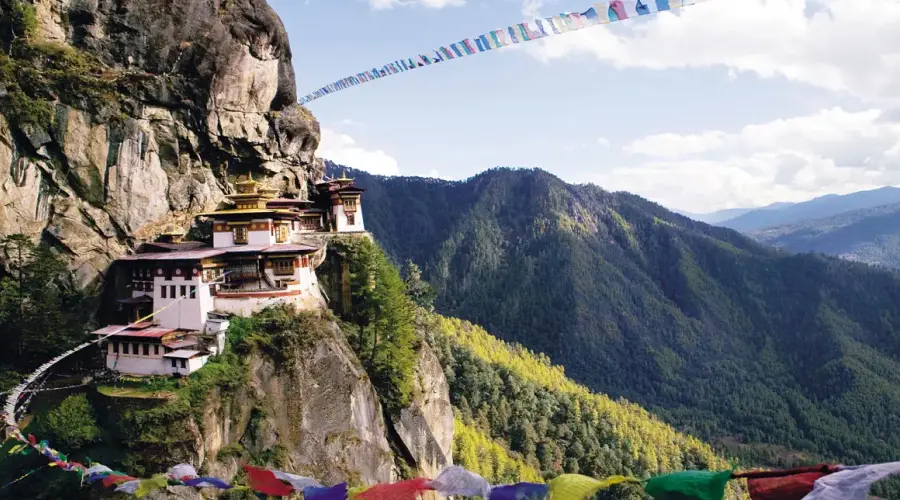
This is the one image everyone has of Bhutan: a white-and-gold monastery glued to a granite cliff, 900-odd metres of sheer drop below it. And yes, it lives up to the photos — but only if you actually do the walk.
The hike is about 6.4 km round trip, climbing roughly 520 metres, and most people take 4 to 5 hours including time inside. I’d call it moderate — not technical, just relentlessly uphill. There’s a cafeteria at the halfway point where you can collapse over a cup of butter tea and stare at the monastery across the gorge. That viewpoint alone is worth the climb for some people.
A few hard-earned tips:
Don’t rush this one. Sit on the steps for ten minutes once you’re up there. The wind, the bells, the drop — that’s the memory you came for.
Planning Tip: Do Tiger’s Nest on your last full day in Paro, not your first — by then you’ll have acclimatised to the altitude and the climb feels noticeably easier.
Most people treat Paro as just the town with the airport (Bhutan’s only international one, and the landing is genuinely one of the most dramatic in the world). That’s a mistake. Paro valley is wide, green and full of small things worth slowing for.
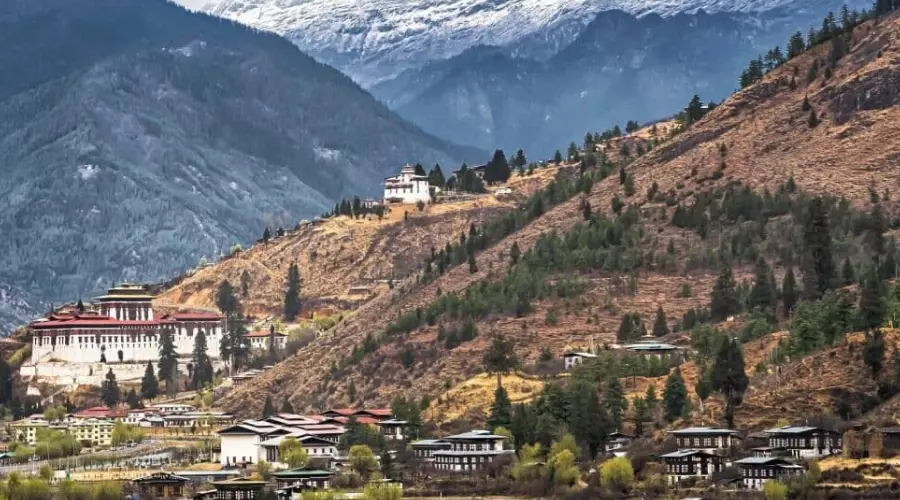
Walk the old main street, poke around the Paro Weekend Market for Himalayan honey, dried chillies and handwoven kira fabric, and make time for Kyichu Lhakhang — one of Bhutan’s oldest temples, 7th century, with an orange tree in the courtyard that supposedly fruits year-round. Rinpung Dzong above the river is the fortress you’ll recognise if you’ve seen the film Little Buddha. The National Museum in the round watchtower above it is small but a good primer on Bhutanese culture before you go deeper into the country.
Planning Tip: Time your trip so a Saturday or Sunday falls in Paro — the weekend market only runs those two days, and it’s the best spot for honest-priced local honey, textiles and crafts.
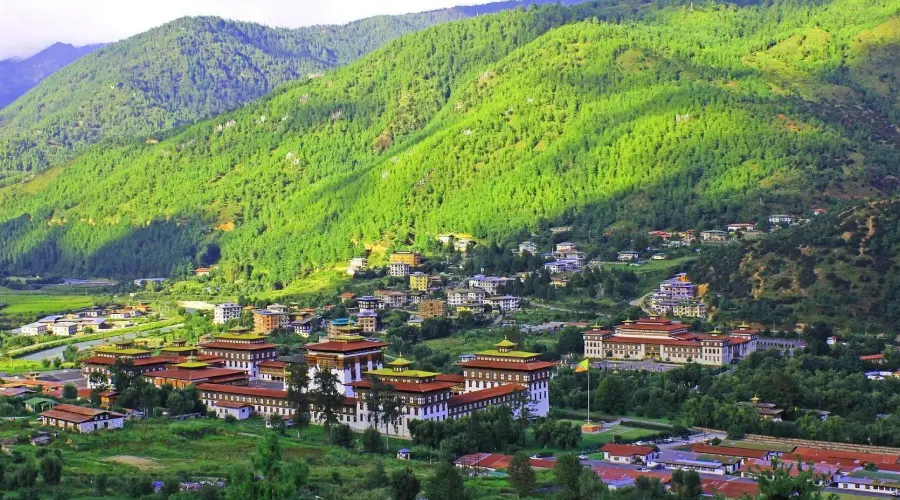
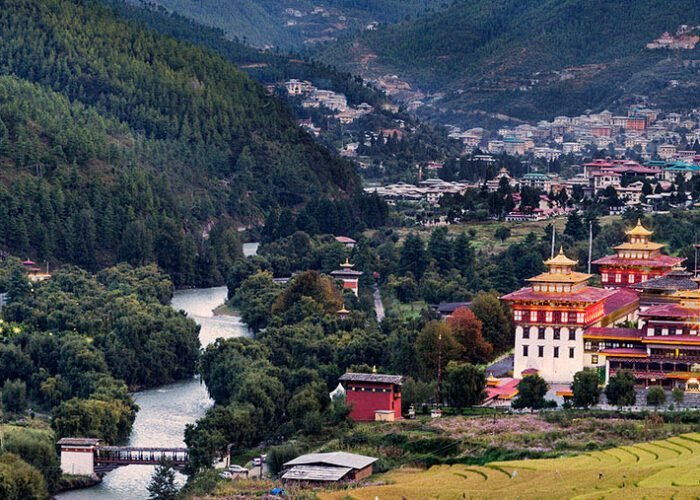
Thimphu is the world’s only national capital without a single traffic light. They installed one once; people hated it and brought back the white-gloved policeman in his little pavilion, directing cars with the elegance of a dancer. That tells you most of what you need to know about the place.
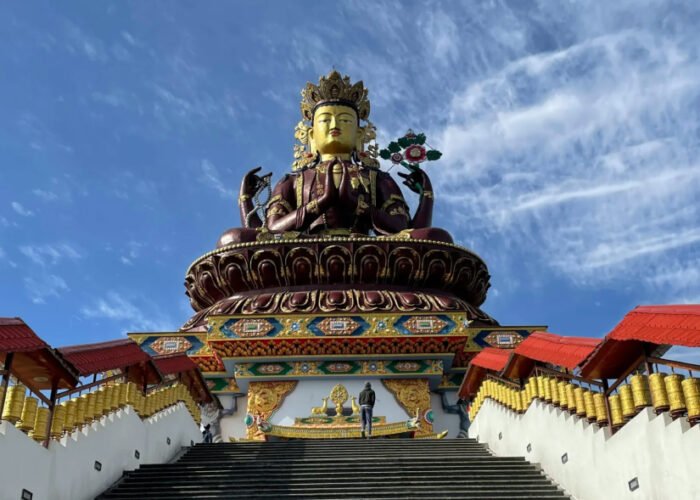
The unmissable stop is the Great Buddha Dordenma, a 51-metre (169-foot) gilded Buddha on a hill above the city, with over 100,000 smaller Buddha statues inside. Go at sunset. Beyond that, wander Tashichho Dzong (the seat of government, open to visitors after office hours), watch craftspeople at the National Institute for Zorig Chusum (the traditional arts school), and if you want something offbeat, the Motithang Takin Preserve — the takin is Bhutan’s bizarre national animal, looking like a cross between a goat and a small bison.
Honest take: Thimphu is pleasant rather than spectacular. Give it a day, two at most, then move on. The real Bhutan is further east.
Planning Tip: Tashichho Dzong only opens to tourists after government office hours (roughly after 5 pm on weekdays, all day on weekends). Plan your dzong visit for late afternoon or you’ll find the gates shut.
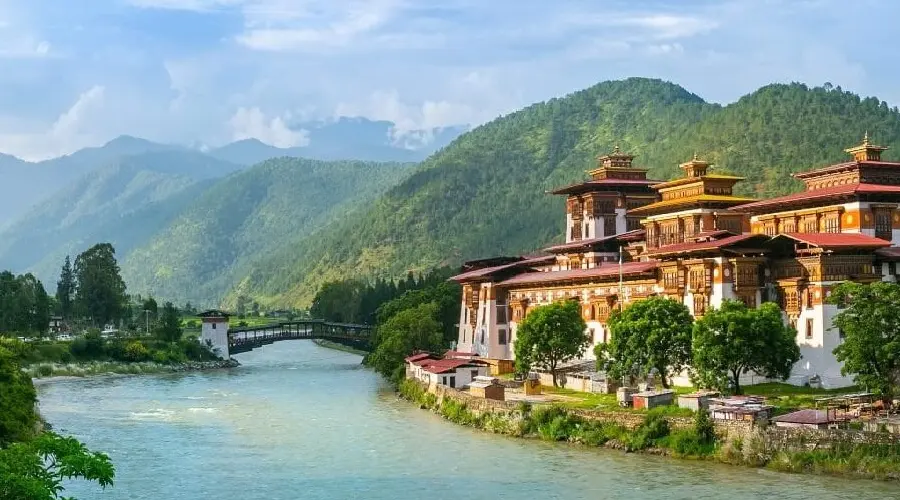
If you visit one dzong in Bhutan, make it Punakha Dzong. It sits at the confluence of two rivers — the Pho Chhu (male) and Mo Chhu (female) — and in spring the courtyard’s jacaranda trees drop a carpet of purple flowers that’s almost unreal. It was Bhutan’s old capital and is still where the king was married. The detail in the woodwork and the murals inside the main hall is some of the finest in the Himalayas.
Getting there means crossing Dochula Pass (more on that below) and dropping into a warmer, lower valley where you can grow rice and even oranges. While you’re in Punakha, the short walk through paddy fields to Chimi Lhakhang, the “fertility temple”, is worth it — though be warned, the village of Sopsokha on the way is covered in painted phalluses, a Bhutanese tradition that startles first-timers. There’s a real cultural story behind it; ask your guide.
Planning Tip: Stay a night in Punakha rather than day-tripping from Thimphu. The valley is warmer and lower, the riverside hotels are some of the nicest in Bhutan, and you’ll catch the dzong in soft morning light before the tour buses arrive.
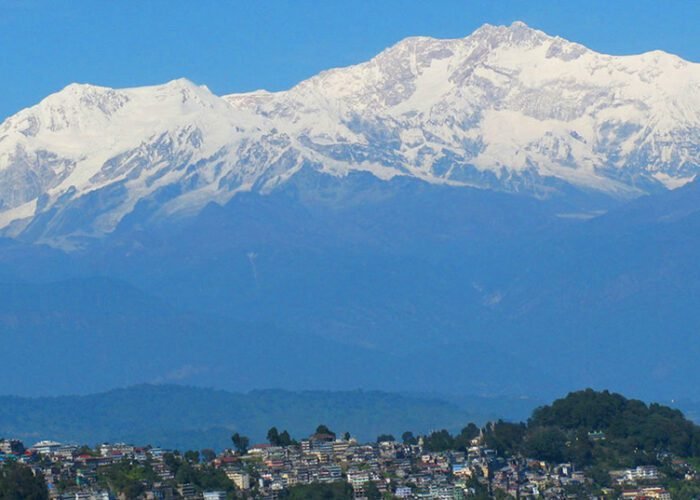
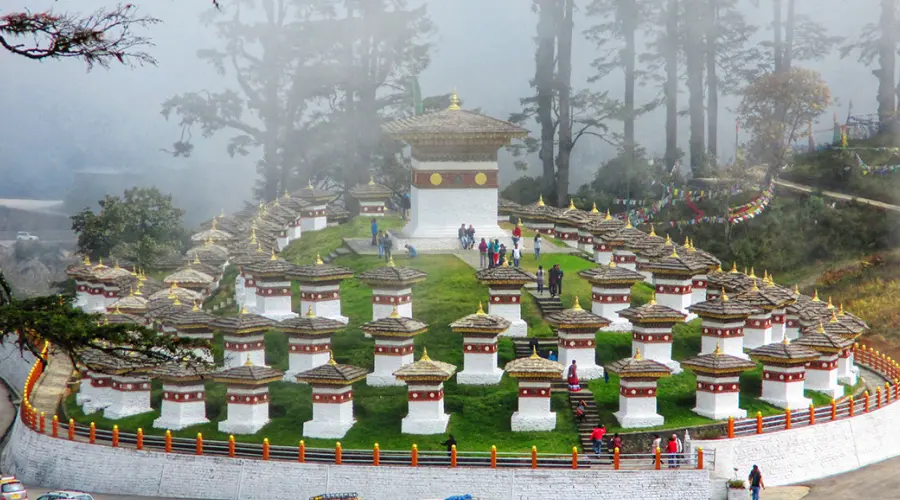
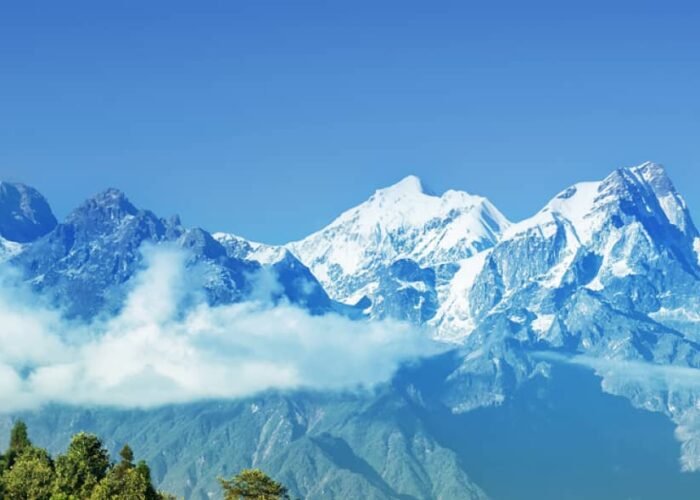
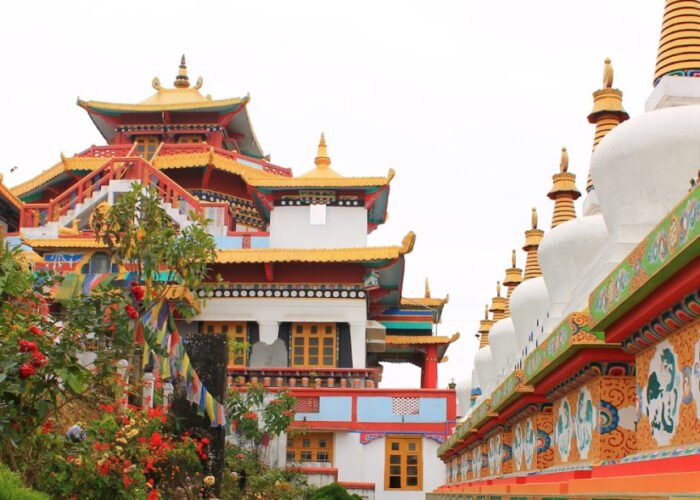
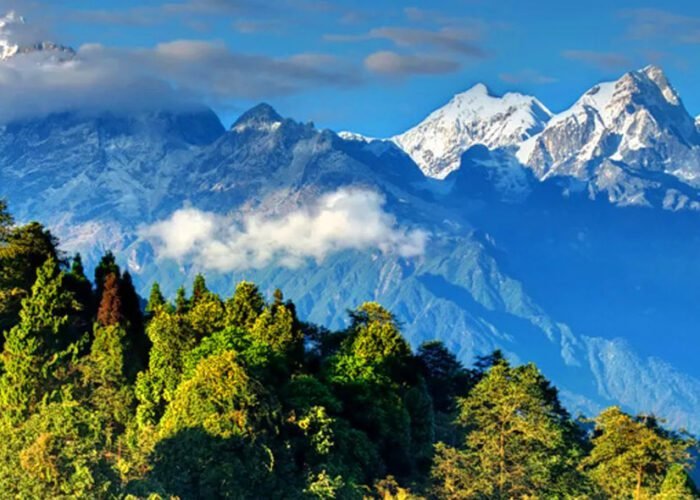
On the road between Thimphu and Punakha you climb to Dochula Pass at around 3,100 m, where 108 chortens (the Druk Wangyal Chortens) sit in neat tiers, built to honour Bhutanese soldiers. On a clear morning — and “clear” is the operative word — you get a panorama of the eastern Himalayan snow peaks stretching across the horizon.
I’ll be straight with you: half the time the pass is socked in with mist and you’ll see nothing but the nearest stupa. Don’t let it ruin your day. The fog has its own moody beauty, the little café does a warm cup of tea and ema datshi, and the mountains are a bonus, not a guarantee. Best odds of a clear view are October to February, early in the morning.
Planning Tip: Cross Dochula as early as you can — ideally before 9 am. The peaks are almost always clearest at sunrise and disappear behind cloud as the day warms up.
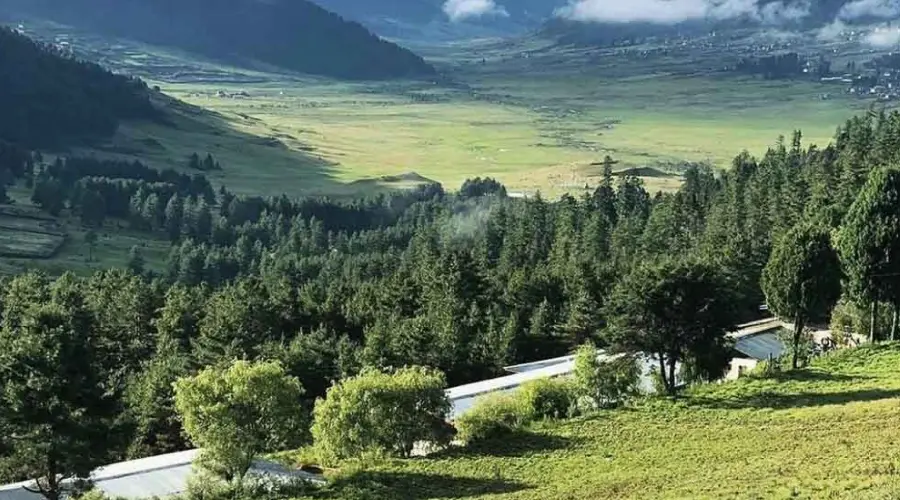
If someone forced me to pick one place in Bhutan, it might be Phobjikha (also called Gangtey). It’s a wide, glacial U-shaped valley with almost no construction — the locals famously went without overhead electricity for years to protect the black-necked cranes that fly in from Tibet each winter.
From late October to mid-February, hundreds of these rare cranes roost in the valley floor. The community celebrates with the Black-Necked Crane Festival at Gangtey Monastery (11 November in 2026). Even outside crane season, the Gangtey Nature Trail is a gentle, gorgeous two-hour walk through meadows and pine. There’s barely any phone signal here. That’s the point. Stay a night if you can — the valley at dawn, frost on the grass, cranes calling, is the kind of thing you don’t forget.
Planning Tip: Carry warm layers even in autumn — Phobjikha sits high and gets bitterly cold at night, and most homestays rely on a single wood-fired bukhari stove for heat. If you want the cranes, lock in late-November to January dates.
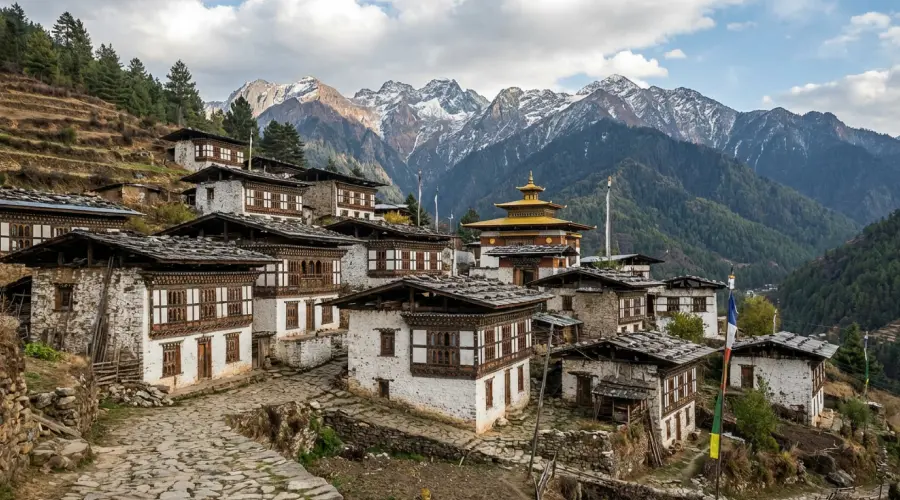
Bumthang is actually four valleys (Chokhor, Tang, Ura and Chhume) in central Bhutan, and it’s where the country’s oldest and holiest temples cluster. Jambay Lhakhang and Kurjey Lhakhang date back over a thousand years. This is also Bhutan’s apple, buckwheat and honey country — try the local Red Panda weiss beer, brewed in Bumthang, and the buckwheat pancakes.
The catch is distance. Bumthang is a long haul east — roughly two days of driving from Paro, on winding mountain roads. If you’ve only got a week, you may not make it this far, and that’s okay. But if you can spare 9–10 days, Bumthang is where Bhutan stops being a sightseeing trip and starts feeling like a pilgrimage. Time it with Jambay Lhakhang Drup (31 Oct–2 Nov 2026) to catch the famous midnight naked fire dance.
Planning Tip: Only commit to Bumthang if you have 9+ days — and break the long drive east with a night in Trongsa or Gangtey rather than attempting it in one brutal stretch.
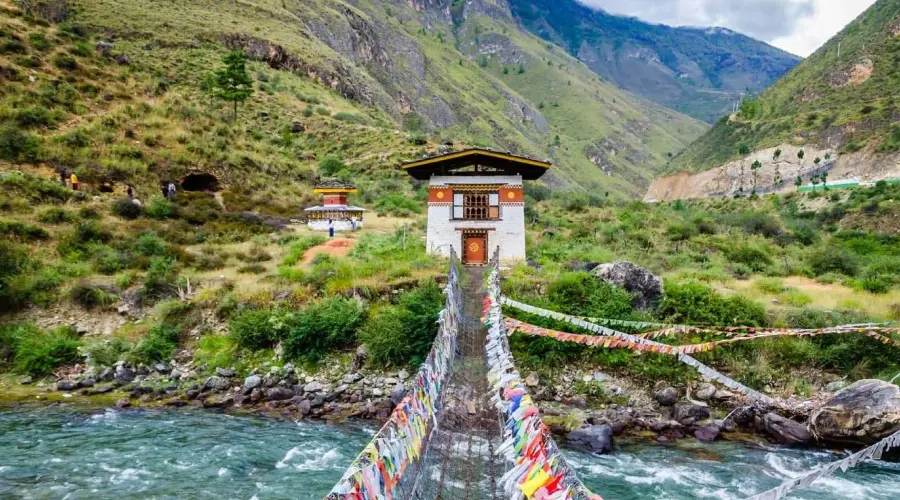
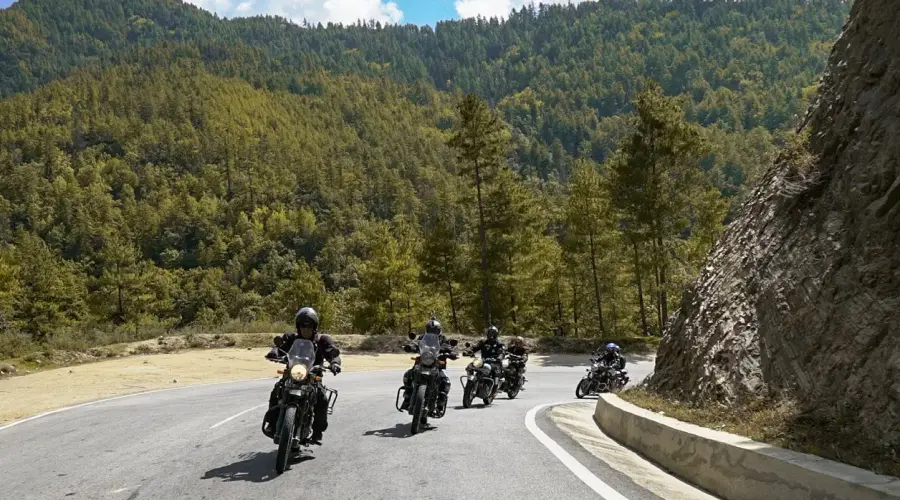
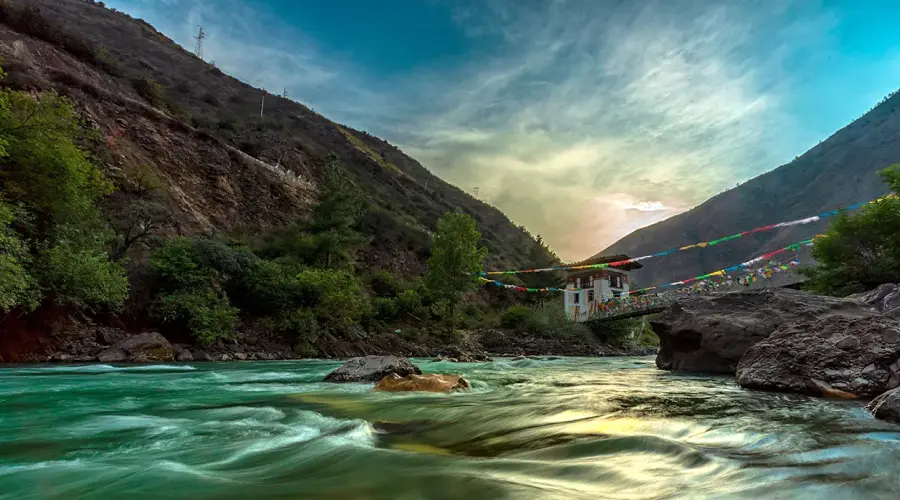
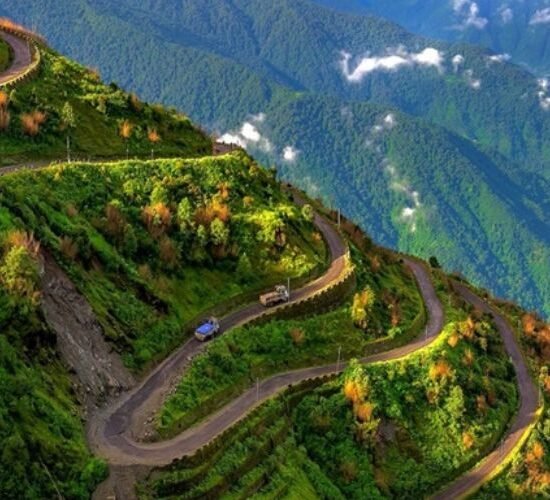
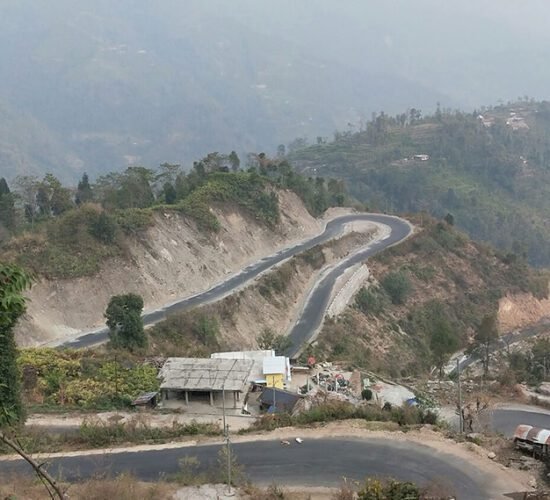
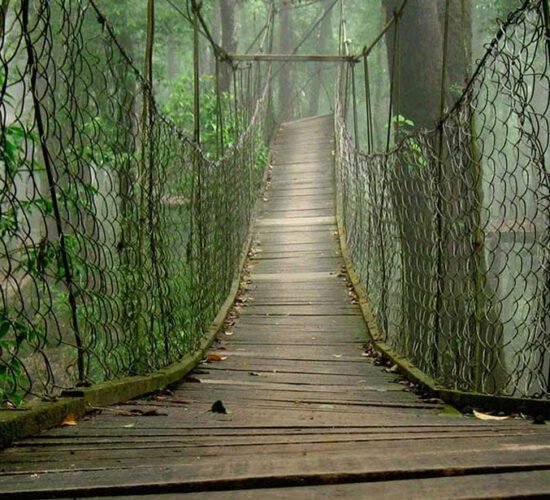
Worth saying plainly: in Bhutan, the drives are the attraction. There’s no train, domestic flights are limited, so you’ll spend real time on the road — and the roads thread through some of the most beautiful forest and river country in the Himalayas. Mist-soaked rhododendron in spring, golden terraced fields in autumn, suspension bridges strung with prayer flags. Don’t think of travel days as wasted. Roll the window down.
Planning Tip: roads are slow — average 30–35 km/h. Plan no more than two major stops per day, and keep motion-sickness tablets handy for the switchbacks.
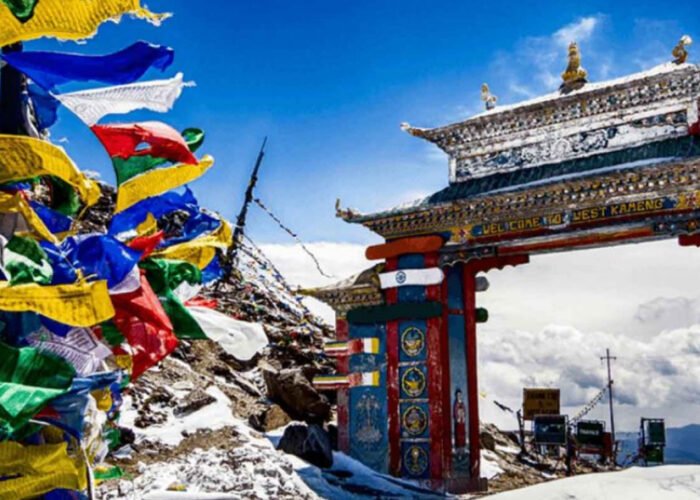
Tucked west of Paro, over the Chele La Pass (Bhutan’s highest motorable road at ~3,988 m, and a stunning drive when the rhododendrons bloom), the Haa Valley only opened to tourists in 2002. It’s quiet, rural, and far less visited. The twin Lhakhang Karpo (white) and Lhakhang Nagpo (black) temples sit at the base of the hills. If you’ve already done Paro and Thimphu on a previous trip, Haa is where you go to feel like you’ve left the trail behind.
Planning Tip: Drive in over Chele La and loop back the other way if roads allow — the pass is the real highlight, and it’s at its best in April–May when the rhododendrons bloom. It can snow shut in deep winter, so check conditions first.
Planning Tip: Don’t try to force all of these in — pick the one or two that fall naturally on your route. Tachog Lhakhang and Simtokha are easy roadside add-ons; Trongsa only makes sense if you’re already heading east.
The two sweet spots are clear:
Spring (March–May). Warm, clear, and the rhododendrons and magnolias go off across the hillsides. This is also when the famous Paro Tshechu (30 March–3 April 2026) fills the dzong courtyard with masked dancers and the unveiling of a giant thongdrel. Easily the best festival to plan around.
Autumn (September–November). Crisp air, the clearest mountain views of the year, and harvest gold in the valleys. Thimphu Tshechu (21–23 September 2026) is the other big one. October is close to perfect weather-wise.
Skip the monsoon (June–August) if mountain views are your priority — roads get leech-y and landslide-prone, and Dochula and the high passes will mostly be cloud. Winter (December–February) is cold but underrated: empty trails, cheap-ish, crystal skies in the west, and crane season in Phobjikha. Just know that eastern Bhutan and high passes can get snowed in.
Because hotels and the Paro flights are genuinely limited, book 3–6 months ahead for spring and autumn. This isn’t a destination you wing.
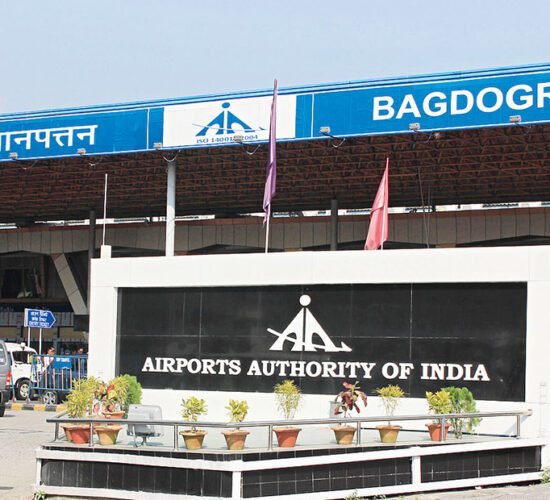
By air: Fly into Paro International Airport on Drukair or Bhutan Airlines, with connections from Delhi, Kolkata, Bagdogra, Guwahati, Bangkok, Kathmandu and a few others. The landing between the hills is famous; only a handful of pilots are even certified to fly it.
By road (the route we use from Sikkim/Bengal): Enter at Phuentsholing, the border town next to Jaigaon in West Bengal. It’s about 4–5 hours from Bagdogra/Siliguri, and from there you process permits and drive up to Paro/Thimphu (another 5–6 hours of climbing). For travellers already exploring Sikkim, Darjeeling or the Northeast, combining the region with Bhutan by road makes a lot of sense — and it’s exactly the kind of multi-stop Himalayan trip we plan often.
Indian nationals need a valid passport or Voter ID (not Aadhaar) and can get the Entry Permit online via the official portal or at Phuentsholing; children need a passport or birth certificate. The permit initially covers Thimphu and Paro — for anywhere further east (Punakha, Phobjikha, Bumthang) you’ll need it extended, which a local operator handles for you. Everyone pays the SDF noted above. Carry several passport photos and keep digital copies of everything; the permit checkpoints along the way will want to see it.
We’re a Sikkim-based team, which means Bhutan is practically next door for us, not a distant brochure destination. We cross that border regularly, we know the Phuentsholing permit process inside out, we know which Paro hotel actually has the valley view and which Phobjikha homestay lights its stove early when the cranes are in.
Because we plan trips across the whole eastern Himalaya, we can stitch Bhutan together with Sikkim, Darjeeling, Kalimpong and the Dooars into one sensible road journey instead of a series of disconnected flights. We sort the SDF and permits, time your trip around the right tshechu, and build in the slow days that make Bhutan worth the fee. Local relationships, real on-ground knowledge of the routes, weather and seasons — that’s the difference between ticking off monasteries and actually feeling the place.
If you’re starting to plan, tell us your dates and roughly how many days you have, and we’ll tell you honestly what’s realistic and what’s worth your time.
For non-Indian travellers, yes-ish — the USD 100/night SDF on top of hotels and guide adds up. For Indian nationals it’s far more affordable at INR 1,200/night SDF. Either way, the fee buys you uncrowded trails and a clean, well-kept country, which most visitors feel is worth it.
Five to seven days covers the western highlights — Paro, Thimphu, Punakha and ideally Phobjikha — at a comfortable pace. For central Bhutan (Bumthang) and the east, plan 9–12 days because of the long mountain drives.
No visa, but you do need an Entry Permit (with passport or Voter ID) and you must pay the SDF. The permit can be arranged online or at the Phuentsholing border, and extended for travel beyond Thimphu and Paro.
It’s moderate — steep but not technical. A reasonably fit person of any age manages it with breaks; allow 4–5 hours round trip and start early. Mules are available to the halfway cafeteria if needed.
April (spring blooms + Paro Tshechu) and October (clearest skies, perfect weather) are the two standouts. Both book out early, so reserve months ahead.
Yes, and it’s one of the best ways to do it. Entering by road via Phuentsholing makes a combined eastern-Himalaya itinerary with Sikkim and Darjeeling very doable — which is exactly the kind of trip we put together at sikkimtourism.org.
Planning a Bhutan trip from India? sikkimtourism.org is a local, Sikkim-based team that handles permits, SDF, festival timing and the full road itinerary across Bhutan and the eastern Himalaya. Get in touch with your dates for an honest, on-ground plan.
An experienced Sikkim tour operator, with a team of an experienced travel enthusiast ensure to give our clients well-designed Sikkim Gangtok tour packages.
Sikkim Tourism has received numerous accolades from its happy customers for its excellent services and best Sikkim holidays.
We have local office in Sikkim for our customers to find assistance anytime and anywhere.
Do not hesitage to give us a call. We are an expert team and we are happy to talk to you.
+91-9810066496
info@sikkimtourism.org
At times, there is a huge difference between what they offer and what they provide. However, SikkimTourism.org kept its promise to us. They put forth a lot of effort to make our trip to Sikkim the finest one ever.
SIKKIMTOURISM.ORG assisted me in planning a trip for my family and me. I spoke with other tour guides and looked through numerous websites. But none could compare to Sikkim Tourism’s degree of professionalism.
Mr. ROHIT phoned me in response to my letter inquiry. He is a really helpful dude. I had a lot of concerns for him, such as the weather in Sikkim and if it was OK to bring my 2-year-old, and he patiently responded to all of them.
We were able to organise our journey to Gangtok, Tsomgo Lake, Baba Mandir, Nathu La, Yumthang Valley, Lachung, and Darjeeling as a result of his insightful ideas.
The dates of our journey were February 7–15 of this year. The itinerary provided by Sikkim Tourism, our travel guide, was fantastic and guaranteed that our vacation will be memorable.
We need drivers who had a thorough understanding of the roads because Sikkim is situated in a hilly area and has twisty roads. We received these from SikkimTourism.ORG, which helped us feel secure.
Eight days were spent travelling. From day 1 to day 8, the schedule included all travel arrangements, information on the vehicles, accommodations, and meals. The crew, in particular Mr. Rohit, kept in touch with us well.
The accommodation, meals, and transportation arrangements were all well-taken care of. What I appreciated most were the safe travel itinerary and the on-time cab drivers. Overall, our trip was enjoyable. Thanks, SikkimToursim.org group
Excellent lodging, outstanding transportation, and lovely memories to cherish. Because of their smooth services, I would heartily suggest SIKKIMTOURISM.ORG tourism. I really appreciate it. Bravo to ROHIT and the rest of the SIKKIM TOURISM.ORG team.
In April 2019, my family and I travelled to Sikkim and Darjeeling. We reserved our tour with SIKKIMTOURISM.ORG to make travel easier. I must say that the accommodations for travel, the mode of transportation, and how the trip was planned were all excellent.